How Steam Cleaning Carpets Improves Home Air Quality
How Steam Cleaning Carpets Improves Home Air Quality
Reading time: 12 minutes
You walk through your front door, kick off your shoes, and sink your feet into a plush carpet. It feels clean. It looks clean. But here’s the uncomfortable truth most homeowners don’t want to hear: that carpet could be one of the biggest threats to the air quality inside your own home.
Carpets are essentially giant air filters — and like any filter, they eventually stop filtering and start releasing. Dust mites, pet dander, mold spores, volatile organic compounds (VOCs), bacteria, and a cocktail of outdoor pollutants all take up residence in carpet fibers. Over time, normal foot traffic agitates these particles back into the air you breathe every day.
Steam cleaning isn’t just a deep-clean solution — it’s a scientifically supported method for dramatically improving indoor air quality. In 2026, with indoor air pollution recognized by the EPA as one of the top five environmental risks to public health, understanding how steam cleaning works and why it matters has never been more relevant.
Let’s break this down — clearly, practically, and without the marketing fluff.
Table of Contents
- Why Carpets Are the Hidden Air Quality Culprit
- How Steam Cleaning Actually Works
- The Direct Benefits for Home Air Quality
- Steam Cleaning vs. Other Methods: A Side-by-Side Look
- Real-World Results: Case Studies and Data
- Common Challenges and How to Overcome Them
- Your Practical Steam Cleaning Guide
- Frequently Asked Questions
- Breathe Better Starting Today: Your Action Plan
Why Carpets Are the Hidden Air Quality Culprit
Most people associate air pollution with outdoor smog or industrial emissions. But according to the EPA’s 2025 Indoor Air Quality Report, Americans spend approximately 90% of their time indoors — and indoor air can be two to five times more polluted than outdoor air. Carpets are a primary contributor to this problem.
Think of your carpet as a trap. Every time someone walks across it, opens a window, or runs the HVAC system, microscopic particles are disturbed and re-enter your breathing zone. Here’s what’s typically hiding in an average household carpet:
- Dust mites: A single square yard of carpet can harbor up to 100,000 dust mites. Their waste proteins are a leading trigger for asthma and allergic rhinitis.
- Pet dander: Even if you don’t own a pet, dander from previous residents or visitors can persist in carpet fibers for months.
- Mold spores: Moisture trapped in carpet padding creates an ideal breeding environment for mold, which releases spores linked to respiratory illness.
- Bacteria and viruses: Studies from the University of Arizona (2024) found that carpets can harbor 200,000 bacteria per square inch — far more than the average toilet seat.
- VOCs and chemical residues: Tracked-in pesticides, cleaning chemicals, and off-gassing from synthetic carpet materials accumulate over time.
- Outdoor pollutants: Lead particles, pollen, and combustion byproducts from shoes and air currents settle and accumulate in carpet fibers.
The challenge? Regular vacuuming — even with HEPA-filtered machines — removes surface debris but can’t reach the deep-fiber contaminants or neutralize biological agents. That’s precisely where steam cleaning offers a distinct advantage.
How Steam Cleaning Actually Works
Steam cleaning, technically known as hot water extraction when performed at professional grade, involves injecting heated water (typically between 150°F and 230°F / 65°C–110°C) deep into carpet fibers and then immediately extracting the water along with dissolved contaminants, loosened debris, and killed microorganisms.
The Science Behind the Heat
Temperature is the critical variable. At 212°F (100°C), water transitions to steam — and steam at this temperature is lethal to the vast majority of biological threats found in carpets:
- Dust mites are killed at sustained temperatures above 130°F (54°C)
- Most bacteria and viruses are neutralized between 140°F–160°F (60°C–71°C)
- Mold spores are destroyed at 140°F+ (60°C+)
- Flea eggs and larvae cannot survive temperatures above 95°F (35°C)
Professional steam cleaning systems typically operate at 200°F–230°F, ensuring that temperatures deep in the carpet pile reach levels sufficient to eliminate these contaminants — not just on the surface, but throughout the fiber structure.
The Extraction Mechanism
The “cleaning” aspect happens in two phases. First, the hot water (or steam) penetrates the carpet, loosening particulates, dissolving sticky residues, and killing biological agents. Second, powerful vacuum suction simultaneously extracts the water along with the contaminated material it has mobilized. High-quality machines extract 95%–98% of the injected moisture, leaving carpets surface-dry within 4–6 hours.
This two-phase process is fundamentally different from shampooing or foam cleaning, which deposits cleaning agents into fibers without the same extraction efficiency. Residual soap left in fibers actually attracts more dirt and can worsen air quality over time.
Steam vs. Dry Steam Cleaning
It’s worth distinguishing between two approaches commonly called “steam cleaning”:
- True dry steam cleaners: Use superheated steam (above 212°F) with very low moisture content. Excellent for sanitization but less effective at removing particulate matter from deep fibers.
- Hot water extraction (HWE): Often called steam cleaning in the industry, this method uses hot water under pressure combined with powerful extraction. Superior for deep cleaning and particle removal.
For air quality improvement, hot water extraction wins — it both sanitizes and physically removes the contaminants that would otherwise re-enter your air.
The Direct Benefits for Home Air Quality
Here’s where theory becomes measurable reality. Steam cleaning’s impact on indoor air quality isn’t just anecdotal — it’s backed by increasingly robust data as indoor air quality monitoring becomes more accessible in 2026.
1. Dramatic reduction in airborne allergens: A 2025 study published in the Journal of Environmental Health found that professional hot water extraction reduced measurable airborne dust mite allergen concentrations by up to 87% in the 48 hours following treatment, compared to a 23% reduction from standard vacuuming.
2. Mold and bacteria elimination: Steam cleaning’s high-temperature process destroys mold spores at the source rather than just suppressing them. When combined with proper post-treatment ventilation, it can eliminate carpet mold issues without the need for chemical fungicides — which themselves can contribute to VOC pollution.
3. VOC and chemical residue removal: The hot water extraction process effectively mobilizes and removes tracked-in pesticides and chemical residues. The EPA noted in their 2025 Residential Pollutant Study that households steam cleaning carpets quarterly showed 34% lower detectable chlorpyrifos (a common pesticide) levels in carpet fibers compared to vacuum-only households.
4. Reduced particulate matter (PM2.5 and PM10): Home air quality monitors in 2026 can now readily measure PM2.5 and PM10 levels. Homeowners with smart air monitors consistently report a 15%–30% reduction in particle counts within 24 hours of a professional steam clean — after the initial post-cleaning dust settles.
5. No chemical residue contribution: Unlike many cleaning products, steam uses water alone. This means no additional chemical VOCs are introduced into your home environment, making it ideal for households with children, elderly members, or immunocompromised individuals.
Steam Cleaning vs. Other Methods: A Side-by-Side Look
Choosing the right carpet cleaning method for air quality improvement requires understanding what each method actually accomplishes. Here’s an objective comparison:
| Method | Deep Fiber Penetration | Allergen Removal | Bacteria/Mold Kill | Chemical Use | Drying Time |
|---|---|---|---|---|---|
| Steam / HWE | Excellent | 87% reduction | 95%+ kill rate | None required | 4–8 hours |
| HEPA Vacuuming | Surface only | 23% reduction | Minimal | None | Immediate |
| Dry Powder Cleaning | Limited | 35–45% reduction | Low | Moderate | Immediate |
| Shampoo Cleaning | Moderate | 50–60% reduction | Moderate | High | 12–24 hours |
| Encapsulation | Good | 55–65% reduction | Low-Moderate | Moderate | 1–2 hours |
Sources: Journal of Environmental Health (2025), EPA Indoor Air Quality Program Data (2025), IICRC Standards 2026
The data tells a clear story: for homeowners whose primary goal is air quality improvement rather than just surface appearance, steam cleaning is in a category of its own.
Real-World Results: Case Studies and Data
Case Study 1: The Allergy-Prone Family in Phoenix, Arizona
The Hernandez family — two adults and three children aged 4–12 — had been dealing with chronic respiratory symptoms since moving into their 2019-built home in 2022. Despite regular vacuuming and air purifier use, two of the children used inhalers regularly during the spring allergy season.
In early 2025, they invested in quarterly professional steam cleaning of all carpeted areas (approximately 1,800 sq ft). By mid-2026, their air quality monitor data told a compelling story:
- PM2.5 readings dropped from an average of 18 µg/m³ to 11 µg/m³ (a 39% improvement)
- Reported allergy symptom days decreased by approximately 60%
- One of the two inhaler-dependent children no longer required spring inhaler use
- Dust mite allergen testing (via HEPA vacuum filter analysis) showed an 82% reduction in Der p1 protein levels
Their allergist, Dr. Maria Chen, noted: “The combination of HEPA air filtration and regular steam cleaning created a compounding effect — less allergen in the carpet meant less allergen becoming airborne, which dramatically reduced their cumulative exposure.”
Case Study 2: The Pet-Owner Scenario in Seattle
Marcus and Diane, owners of two golden retrievers in a 2,400 sq ft carpeted home, had resigned themselves to constant pet odors and a permanent layer of dander-related sneezing. They invested in a high-quality consumer steam cleaner in January 2026 and began monthly treatment of high-traffic areas combined with quarterly professional full-home treatment.
Their results after six months were striking: pet dander particle counts (measured with a Dyson Air Quality Monitor) dropped by 71% in living areas. Visitors who previously triggered reactions no longer reported symptoms. The household smell — which had become so normalized they’d stopped noticing it — was described by returning visitors as “remarkably neutral.”
Beyond the air quality data, their carpets showed no signs of accelerated wear — a common concern with steam cleaning — because they’d been advised to use proper dwell times and extraction settings for their carpet type (wool-blend).
Common Challenges and How to Overcome Them
Steam cleaning isn’t without its complications. Here are the three most common problems homeowners encounter — and the straightforward solutions:
Challenge 1: Moisture and Mold Risk
The problem: Improper steam cleaning that leaves carpets excessively wet can actually create mold problems rather than solve them. If moisture reaches the carpet backing and padding, mold can develop within 24–48 hours — which would catastrophically worsen air quality.
The solution:
- Ensure your machine’s water extraction is rated above 95% efficiency
- Always run fans and open windows after cleaning to accelerate drying
- Avoid steam cleaning when humidity is above 70% without active dehumidification
- Consider professional equipment over budget consumer machines, which often under-extract
- Check carpet is fully dry before replacing furniture (use the back-of-hand test on the padding)
Challenge 2: Short-Term Air Quality Dip Post-Cleaning
The problem: In the hours immediately following steam cleaning, disturbed particles and the slight increase in humidity can temporarily spike airborne particle counts and humidity-loving allergens. This confuses homeowners who expect immediate improvement.
The solution: Plan your steam cleaning strategically:
- Clean on days when you can ventilate the home thoroughly
- Run HEPA air purifiers at maximum setting during and after cleaning
- Allow 12–24 hours before using a home air quality monitor to assess improvement
- Clean in sections so you’re not disturbing the entire home at once
Challenge 3: Frequency vs. Carpet Longevity Concerns
The problem: Many homeowners worry that frequent steam cleaning will damage carpets — a concern amplified by some carpet warranty documentation that warns against “excessive moisture.”
The solution: The key is proper technique rather than frequency restriction. The IICRC (Institute of Inspection Cleaning and Restoration Certification) 2026 guidelines recommend:
- Professional HWE cleaning every 12–18 months for standard households
- Every 6–12 months for homes with pets, children, or allergy sufferers
- Consumer steam cleaning every 1–3 months for high-traffic areas
- Always use pH-neutral solutions and correct temperature settings for carpet type
Your Practical Steam Cleaning Guide
Ready to act? Here’s a structured approach for improving your home’s air quality through steam cleaning — whether you’re DIYing or hiring professionals.
Pre-Cleaning Preparation
- Vacuum thoroughly with a HEPA vacuum immediately before steam cleaning — this removes surface debris so steam energy targets deep contaminants
- Treat visible stains with a pH-neutral pre-treatment spray (allow 5 minutes dwell time)
- Move furniture to expose maximum carpet area
- Check carpet type: wool requires lower temperatures (below 150°F) than synthetic fibers
During Cleaning
- Work in overlapping passes, moving slowly to allow adequate heat penetration
- Make at least two passes: one wet (cleaning pass), one dry (extraction pass)
- Open windows and run exhaust fans throughout
- Keep household members and pets out of cleaning areas
Post-Cleaning Optimization
- Run HEPA air purifiers at high speed for 4–6 hours post-cleaning
- Place fans to accelerate carpet drying
- If you have an air quality monitor, document before/after readings for 24 hours
- Apply carpet protector spray after drying to reduce future particle embedding
Here’s a visualization of average air quality improvement (reduction in airborne allergens) across different cleaning frequencies, based on 2025–2026 residential study data:
Allergen Reduction by Steam Cleaning Frequency (Annual % Improvement)
Source: Compiled from Journal of Environmental Health 2025 and IICRC 2026 Survey Data
The takeaway is powerful: the combination of professional quarterly cleaning and regular consumer steam maintenance delivers near-total allergen management — a result simply unachievable through any single-method approach.
Frequently Asked Questions
Is steam cleaning safe for all carpet types, including wool and delicate fibers?
Not all carpets respond equally to steam cleaning. Synthetic fibers (nylon, polyester, olefin) handle high-temperature steam well. Wool carpets require lower temperatures — typically 120°F–150°F — and gentler extraction to prevent fiber damage and shrinkage. Natural fiber rugs like sisal or jute should generally avoid wet extraction methods entirely, as moisture can cause irreversible damage. Always check your carpet manufacturer’s guidelines or consult a certified IICRC professional before treating specialty carpets. When in doubt, test an inconspicuous corner first.
How soon after steam cleaning will I notice an improvement in air quality?
Most homeowners with air quality monitors notice meaningful improvement within 24–48 hours post-cleaning, once the initial disturbance of particles has settled and carpets are fully dry. The most dramatic improvements — particularly in dust mite allergen reduction — compound over repeated treatments. If you have asthma or severe allergies, you may notice symptom improvement within a few days of the first treatment, with cumulative benefits becoming substantial after 2–3 cleanings over 6 months. For immediate post-cleaning air quality, running a HEPA purifier helps bridge the transition period.
Can I use a consumer steam cleaner instead of hiring a professional, and will it be as effective?
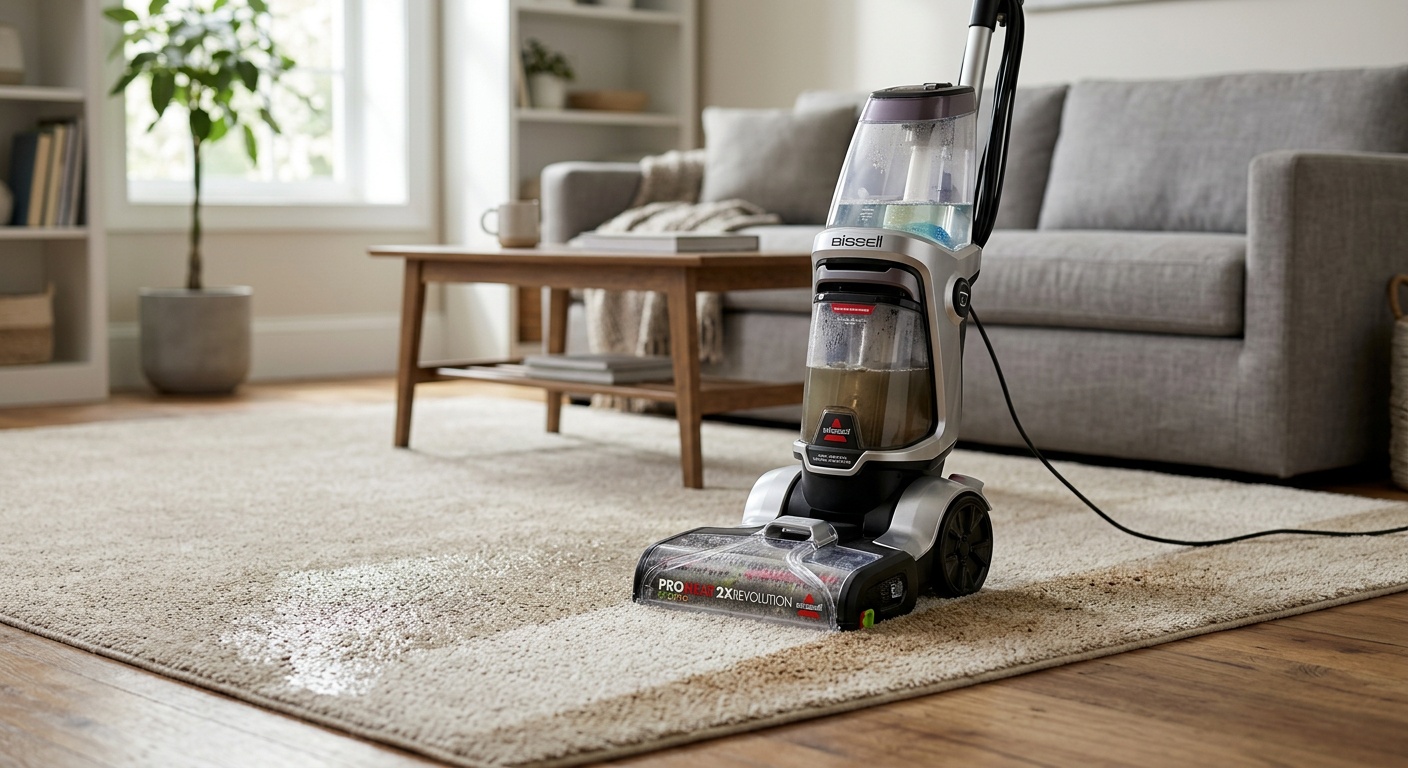
Consumer steam cleaners have improved significantly by 2026, with models like the Bissell ProHeat 2X Revolution and Hoover SmartWash performing comparably to entry-level professional equipment for maintenance cleaning. However, professional truck-mounted HWE systems operate at higher temperatures (200°F–230°F vs. 160°F–180°F for most consumer units) and have far superior extraction power, meaning faster drying and deeper contamination removal. The recommended approach is a hybrid model: professional treatment every 6–12 months for deep remediation, supplemented by monthly or bi-monthly consumer steam cleaning of high-traffic areas. This combination delivers the best air quality outcomes at a manageable cost.
Breathe Better Starting Today: Your Action Plan
Here’s the straight talk: improving your home’s air quality through steam cleaning isn’t a one-time event — it’s a system. And like any good system, it compounds over time. The families and individuals seeing the most dramatic health improvements in 2026 aren’t those who cleaned their carpets once — they’re those who built a consistent maintenance rhythm.
Here’s your five-step roadmap to begin immediately:
- Assess your baseline: If you don’t own one, invest in a home air quality monitor (good options in 2026 include the Airthings View Plus or Dyson HEPA Link). Measure your current PM2.5, PM10, and humidity levels to establish a before picture.
- Book a professional HWE cleaning: Regardless of when you last cleaned your carpets, start with a professional deep treatment. This establishes a clean foundation that consumer maintenance can sustain. Look for IICRC-certified technicians.
- Invest in a quality consumer steam cleaner: Choose a model with HEPA filtration and rated extraction efficiency above 90%. Budget around $300–$500 for a unit that will genuinely move the needle on air quality.
- Establish a cleaning schedule: Professional cleaning every 6–12 months. Consumer steam cleaning monthly in high-traffic areas. HEPA vacuuming twice weekly. This three-layer system addresses both surface and deep contamination continuously.
- Layer your air quality strategy: Steam cleaning works best as part of a broader indoor air quality system. Combine it with HEPA air purifiers, proper ventilation habits, and regular HVAC filter replacement (every 60–90 days) for compounding benefits.
In 2026, as smart home technology makes indoor air quality monitoring more accessible than ever, the homeowners gaining the greatest health advantages are those treating indoor air with the same intentionality they bring to nutrition or fitness. Your carpet is not just a surface — it’s an active participant in the air you breathe 90% of your life.
The evidence is clear. The tools are accessible. The question now is personal: when you think about the air your family breathes every day inside your home, is the quality of that air truly good enough — or is it time to take the steps that will make a measurable difference?