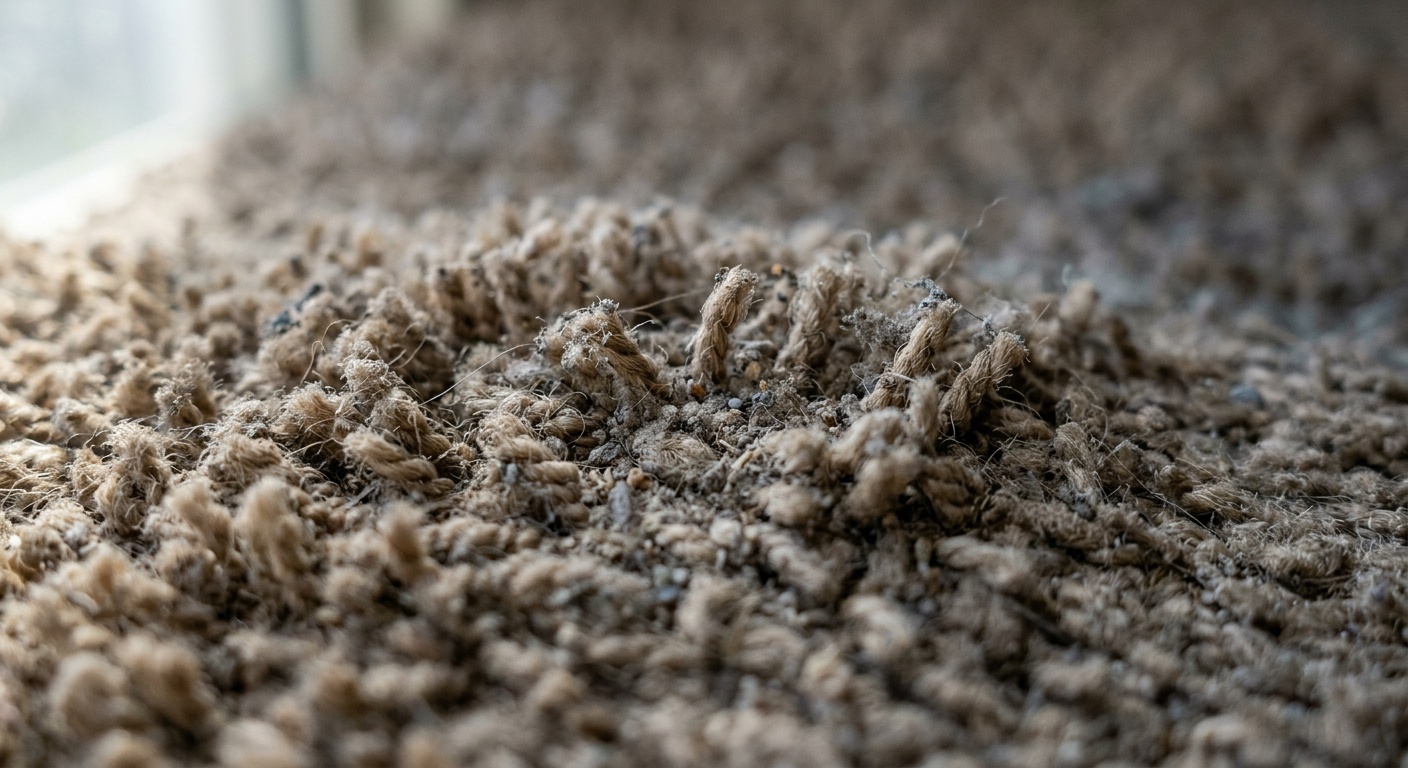
Carpet Fiber Types That Trap the Most Dust and Pollutants
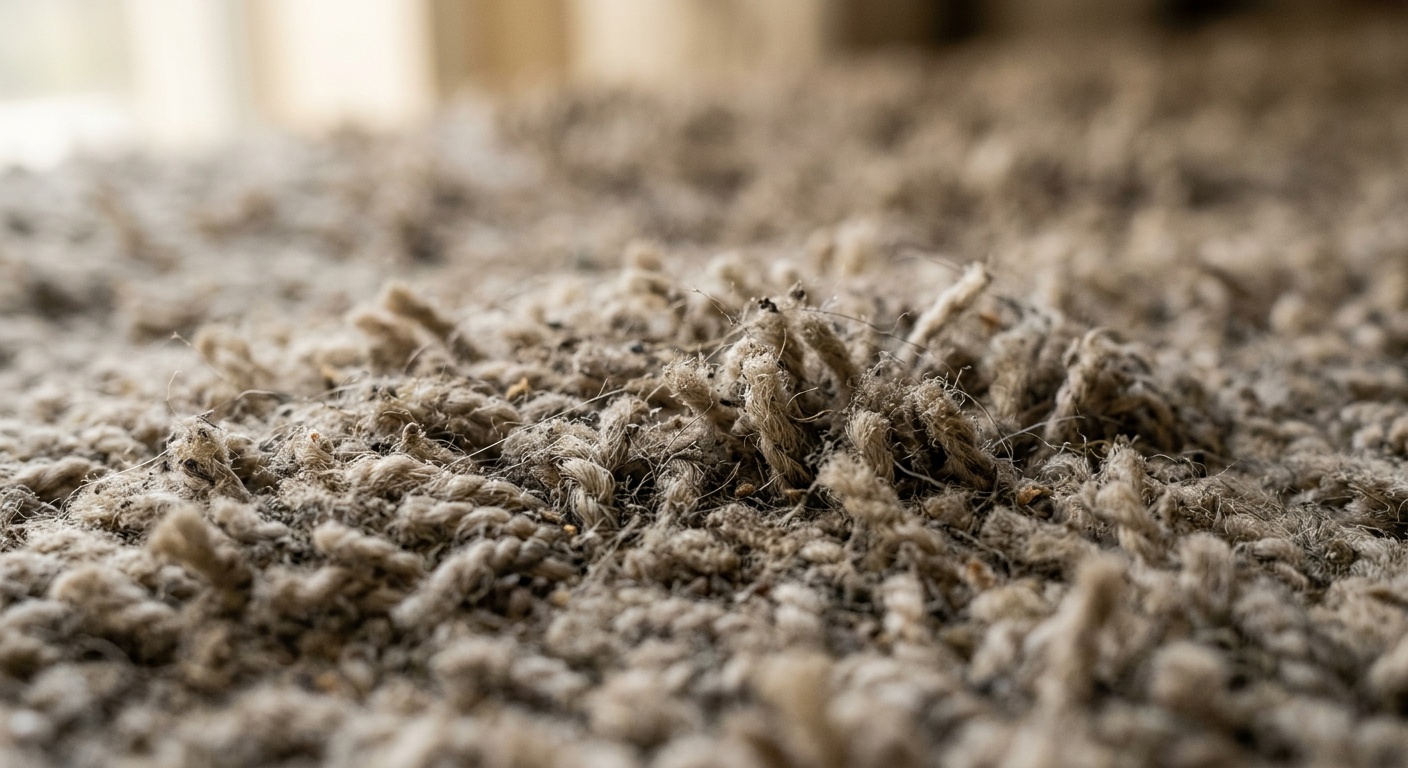
Carpet Fiber Types That Trap the Most Dust and Pollutants
Reading time: 12 minutes
You vacuum diligently every week. You change your air filters on schedule. And yet, somehow, your home still feels dusty, your allergies flare up, and your indoor air quality monitor keeps flashing amber. Sound familiar? The culprit might be right beneath your feet — literally.
Carpet is one of the most complex and underestimated elements in indoor air quality management. While hard floors let pollutants circulate freely in the air you breathe, carpet acts as a massive filter — trapping dust, pet dander, pollen, mold spores, volatile organic compounds (VOCs), and a surprising variety of other contaminants. But here’s the catch: not all carpet fibers are created equal, and the wrong fiber type in the wrong environment can turn your floor into a pollution reservoir rather than a manageable filter.
In 2026, with the global indoor air quality market valued at over $14 billion and growing at a compound annual rate of 8.4%, understanding what your carpet is actually doing to your home environment has never been more relevant. Let’s break down the science, the fiber types, and what you should actually do about it.
Table of Contents
- Why Carpet Fiber Type Actually Matters
- The Main Carpet Fiber Types and Their Dust-Trapping Profiles
- The Worst Offenders: Fibers That Trap the Most Pollutants
- Side-by-Side Comparison Table
- Pollutant Retention Visualization
- Real-World Scenarios: What Happens in Practice
- Common Challenges and How to Overcome Them
- Practical Tips for Every Fiber Type
- Frequently Asked Questions
- Breathe Easier: Your Carpet Action Plan
Why Carpet Fiber Type Actually Matters
Think of your carpet as a passive air filter. Every time someone walks through your home, sits on the floor, or even opens a window, particulate matter settles downward. Carpet intercepts that fall — which is actually a good thing, provided you clean it effectively and regularly.
The problem emerges when carpet holds onto pollutants so tightly that normal vacuuming can’t dislodge them, or when the fiber structure becomes a breeding ground for biological contaminants like dust mites and mold. According to a 2025 report by the Indoor Air Quality Association (IAQA), carpet can hold up to four times its own weight in dust, dirt, and other particles. But that retention rate varies dramatically — sometimes by a factor of three or four — depending entirely on the fiber type.
The fiber’s texture, electrostatic charge, moisture absorption capacity, and pile construction all determine how aggressively it holds onto airborne particles, how easily those particles are released when disturbed, and how effectively they can be removed through cleaning.
Here’s the straight talk: choosing the right carpet fiber isn’t just an aesthetic decision — it’s a health decision. And if you already have carpet installed, understanding its properties tells you exactly how aggressively you need to clean it.
The Main Carpet Fiber Types and Their Dust-Trapping Profiles
Natural Fibers: Wool, Cotton, and Sisal
Natural fibers have been used in carpeting for thousands of years, and they remain popular in 2026 — particularly as consumers shift toward sustainable, biodegradable materials. But their relationship with dust and pollutants is complicated.
Wool is the gold standard of natural carpet fibers, but it comes with a significant caveat for allergy sufferers. Wool fibers have a naturally scaly, overlapping structure (called the cuticle), which gives wool its famous softness and resilience but also creates microscopic pockets that trap fine particulate matter extraordinarily well. A 2024 study published in the Journal of Environmental Science and Health found that wool carpets retained up to 68% more fine particulate matter (PM2.5) than comparable nylon carpets after 30 days of normal residential use.
On the upside, wool is naturally moisture-wicking and has some inherent resistance to bacterial growth. On the downside, it’s a powerful dust and allergen trap that requires more intensive, specialized cleaning.
Cotton carpets and rugs are softer and more washable, but their open fiber structure and high moisture absorbency make them prone to mold and mildew growth — especially in humid environments. Cotton holds dust loosely on the surface, which means vacuuming is effective, but it also means particles become airborne again easily when the carpet is disturbed.
Sisal, jute, and seagrass — the natural “hard” fibers gaining popularity in eco-conscious households — are actually among the better performers for dust control. Their tightly woven construction traps less fine dust, and their low electrostatic charge means particles don’t cling aggressively. However, they absorb moisture readily and can harbor mold in damp climates.
Synthetic Fibers: Nylon, Polyester, Olefin, and Triexta
Synthetic fibers dominate the residential and commercial carpet market, accounting for roughly 87% of all carpet sold in North America in 2025, according to the Carpet and Rug Institute (CRI). Each synthetic fiber has a distinct dust-trapping profile.
Nylon is the most widely installed carpet fiber globally, prized for its durability and resilience. From an air quality perspective, nylon occupies an interesting middle ground. It has a moderate electrostatic charge that attracts fine particles, and its tight, curled fiber structure can trap dust effectively — but it’s also one of the most cleanable fiber types. High-quality nylon with a stain-resist treatment is generally considered the best balance between aesthetic performance and manageable allergen retention.
Polyester (including recycled PET versions, which have surged in popularity due to their sustainability credentials) is inherently hydrophobic, meaning it resists moisture and liquid staining well. However, polyester generates significant static electricity, particularly in low-humidity environments. This electrostatic charge attracts and holds fine dust particles, pet dander, and even some VOCs with considerable tenacity. Once embedded, these particles are notably harder to remove than from nylon.
Olefin (polypropylene) is inexpensive, moisture-resistant, and commonly used in berber-style and commercial loop pile carpets. Its low moisture absorption is a genuine advantage against mold and dust mites. However, olefin’s waxy surface and static-prone nature mean that oily particles and fine dust can bind to the fiber surface at a molecular level, making thorough cleaning surprisingly difficult despite the fiber’s apparent simplicity.
Triexta (marketed under the brand name Sorona, made partially from corn glucose) is relatively new but growing fast. Its soft, hydrophobic surface shows promising results for allergen resistance — in 2025, CRI testing showed triexta retaining approximately 22% less dust mite allergen than standard polyester under identical conditions. It’s a fiber worth watching for allergy-conscious consumers.
The Worst Offenders: Fibers That Trap the Most Pollutants
If you’re specifically concerned about indoor air quality, here’s the ranked reality of which fiber types are most problematic — and why.
1. Wool (high-pile) tops the list for fine particulate and allergen retention due to its scaly cuticle structure. High-pile wool rugs in particular create deep reservoirs where dust mites thrive. A single gram of high-pile wool carpet can harbor up to 2,000 dust mites under typical home conditions.
2. Polyester (especially shag and frieze cuts) combines high static charge with deep pile, creating an environment where fine particles are both attracted electrostatically and physically trapped in the pile depth. The popularity of ultra-soft polyester “cloud carpets” in 2025-2026 home décor trends is a direct collision between comfort aesthetics and air quality management.
3. High-pile nylon performs worse than its cut-pile counterparts purely because pile depth creates more surface area and more physical trapping opportunity. The fiber itself is manageable; the construction amplifies the problem.
4. Cotton (loop pile) retains moisture and biological contaminants effectively, making it a risk factor for mold spore accumulation in humid climates — particularly relevant in 2026 as more regions experience elevated summer humidity levels due to shifting weather patterns.
Side-by-Side Comparison Table
| Fiber Type | Dust Retention Level | Allergen Risk | Mold/Moisture Risk | Cleanability |
|---|---|---|---|---|
| Wool | Very High | High | Moderate | Difficult |
| Polyester | High | Moderate–High | Low | Moderate |
| Nylon | Moderate | Moderate | Low–Moderate | Good |
| Olefin | Moderate | Low–Moderate | Very Low | Moderate |
| Triexta | Low–Moderate | Low | Very Low | Very Good |
Pollutant Retention Index by Fiber Type
The following visualization represents the Relative Pollutant Retention Index — a composite score based on fine dust, allergen, VOC, and biological contaminant retention, normalized to a scale of 0–100. Lower scores indicate less retention and better air quality performance. Data synthesized from CRI testing data and IAQA 2025 field studies.
Real-World Scenarios: What Happens in Practice
Case Study 1: The Family with Persistent Allergy Symptoms
Consider the Johnson household in suburban Atlanta — a family of four that installed a beautiful, thick wool berber carpet throughout their main living areas in 2023. By late 2024, two of their children were experiencing worsening seasonal allergies year-round, not just during spring pollen season. Their allergist recommended indoor air quality testing, and the results were illuminating.
The wool carpet was harboring dust mite allergen levels of 12.4 micrograms per gram of carpet dust — more than six times the threshold (2 µg/g) considered a sensitization risk by the World Health Organization. Despite weekly vacuuming with a standard upright vacuum, the scaly wool fibers were retaining allergen-laden particles deep in the pile where the vacuum’s suction simply couldn’t reach.
The solution wasn’t carpet removal — it was a combination of a HEPA-rated vacuum with motorized brush head, quarterly professional hot water extraction cleaning, and a dehumidifier to keep relative humidity below 50% (the threshold above which dust mites thrive). Within eight months, measured allergen levels dropped by 74%, and the children’s symptoms improved significantly. The key insight: knowing your fiber type tells you how aggressively you need to clean, not necessarily whether to replace the carpet entirely.
Case Study 2: A Commercial Office Upgrade in 2025
A mid-sized tech firm in Seattle renovating its office space in early 2025 faced a common dilemma: budget-friendly polyester carpet tile (popular for modular office builds) versus more expensive nylon or triexta options. Their facilities manager, armed with 2024 CRI data, made the case that the polyester tiles’ higher static charge would accelerate dust accumulation at workstations — directly relevant in a city with significant wildfire smoke particulate issues.
They chose a commercial-grade nylon tile with a low-pile, tight loop construction — and budgeted for quarterly HEPA vacuuming and annual professional cleaning. Air quality monitoring conducted six months post-installation showed PM2.5 levels at workstations that were 31% lower than their previous polyester-tiled office space, measured against identical occupancy levels and HVAC performance. The fiber choice, combined with a structured cleaning protocol, delivered measurable air quality returns.
Common Challenges and How to Overcome Them
Understanding fiber types is half the battle. The other half is navigating the practical challenges of managing carpet as a pollution sink in real homes and workplaces.
Challenge 1: Standard vacuums can’t fully clean high-retention fibers. This is the most widespread problem. A 2025 consumer testing report by Which? found that standard upright vacuums removed only 54–62% of embedded particulate matter from high-pile wool and polyester carpets, compared to 78–85% from low-pile nylon under identical conditions. The fix: invest in a vacuum with a HEPA filter, a motorized beater bar, and adjustable suction. For wool or deep-pile polyester, budget for professional hot water extraction at least twice a year.
Challenge 2: Moisture management in natural fiber carpets. Wool and cotton carpets are particularly vulnerable to mold when humidity is not controlled — a growing concern as 2026 sees more regions experiencing extended periods of elevated relative humidity. Use a calibrated hygrometer in carpeted rooms. If relative humidity exceeds 55%, run a dehumidifier. Address any spills on natural fiber carpets immediately with blotting (not scrubbing) and allow thorough drying within 24–48 hours to prevent mold colonization.
Challenge 3: VOC off-gassing from new synthetic carpets. New polyester and nylon carpets can off-gas volatile organic compounds — including styrene, 4-phenylcyclohexene (4-PCH), and formaldehyde from backing adhesives — for weeks or months after installation. In 2026, CRI’s Green Label Plus certification program covers over 1,200 carpet products tested for low VOC emissions. Always look for this certification when purchasing new carpet, and ventilate newly installed carpet areas aggressively for at least 72 hours after installation.
Practical Tips for Every Fiber Type
Here’s your actionable guide to managing whatever carpet you currently have:
- For wool carpets: Vacuum at least twice weekly with a HEPA vacuum. Use the lowest effective beater bar setting to avoid fiber damage. Schedule professional hot water extraction every 6 months. Keep indoor humidity below 50%. Consider applying a dust mite treatment product (look for products approved under EPA Safer Choice in 2026).
- For polyester carpets: Vacuum weekly with a vacuum that has strong suction and a HEPA filter. Be particularly vigilant in winter when low humidity increases static charge and particle attraction. Use doormats at all entrances to reduce particulate load. Professional cleaning annually is the minimum recommendation.
- For nylon carpets: The most forgiving fiber to maintain. Weekly vacuuming with a quality vacuum is generally sufficient. Professional cleaning every 12–18 months maintains both appearance and air quality performance. Nylon responds well to hot water extraction.
- For olefin/polypropylene carpets: Low moisture risk makes these a reasonable choice for basements. Weekly vacuuming is adequate for most environments. Be aware that oily soils bond tenaciously — treat oil-based stains promptly with appropriate solvents before they set.
- For triexta carpets: Currently the lowest-maintenance option from an allergen perspective. Weekly vacuuming and annual professional cleaning is typically sufficient. Ideal for households with moderate allergy concerns where carpet removal is not practical.
Pro Tip: Regardless of fiber type, placing quality entry mats (both outside and inside each entrance) can reduce the particulate load entering your carpeted spaces by up to 40–60%, according to a 2024 study from the EPA’s Indoor Environments Division. This is the single highest-impact, lowest-cost intervention available.
Frequently Asked Questions
Is it always better to remove carpet entirely for people with allergies?
Not necessarily — and this is one of the most persistent myths in indoor air quality management. Hard floor surfaces don’t trap particles; they allow them to remain suspended in the breathing zone or become airborne with every footstep. Carpet, when properly maintained, actually keeps many allergens sequestered at floor level where they’re less likely to be inhaled. A 2024 meta-analysis in the Journal of Allergy and Clinical Immunology found that well-maintained, low-pile synthetic carpet performed comparably to hard floors in terms of respiratory allergen exposure in controlled environments. The critical variable is your cleaning regimen, not simply the presence of carpet. That said, for individuals with severe dust mite allergies or asthma, removing high-pile natural fiber carpets from bedrooms specifically is generally recommended by most allergists in 2026.
Do carpet treatments and coatings affect how much dust a carpet traps?
Yes, significantly. Modern stain-resist treatments — including fluoropolymer-based coatings and the newer PFAS-free alternatives increasingly adopted since 2025 — create a smoother fiber surface that reduces the adhesion of fine particles and allergens. Factory-applied treatments are generally more effective and durable than aftermarket spray applications. Look for carpets with integrated soil-resist treatments when purchasing new carpet. Be aware, however, that some older-generation stain treatments contain PFAS compounds (forever chemicals) that carry their own health concerns — the shift to PFAS-free formulations in the carpet industry is an important development to monitor in 2026 purchasing decisions.
How does carpet pile height affect pollutant trapping compared to fiber type?
Pile height is actually as significant as fiber type in many scenarios, and the two factors interact multiplicatively. A low-pile (under 1/4 inch) carpet in wool will trap significantly less dust than a high-pile (over 3/4 inch) version of the same fiber, because pile depth determines how deeply particles can migrate and how accessible they are to vacuum suction. Generally, every additional 1/4 inch of pile height increases effective particulate retention by approximately 15–25% according to CRI testing protocols. For households prioritizing air quality, choosing a low-pile or medium-pile construction (regardless of fiber type) is consistently more impactful than fiber selection alone. If you love the look and feel of high-pile carpet, compensating with a more aggressive cleaning schedule and a premium vacuum is non-negotiable.
Breathe Easier: Your Carpet Action Plan
You now have a clearer picture of what’s actually happening beneath your feet — and the knowledge to act on it. Here’s your practical roadmap forward:
- Step 1 — Identify your fiber type. If you don’t know what your carpet is made of, check the purchase records, look for a CRI tag on the underside, or contact your installer. This single piece of information determines everything else in your strategy.
- Step 2 — Audit your current vacuum. If you’re using a vacuum without a HEPA filter on a wool or high-pile polyester carpet, you’re redistributing dust rather than removing it. A vacuum upgrade is the highest-ROI investment for carpet air quality.
- Step 3 — Set up a humidity monitoring system. A $25–50 smart hygrometer in your main living areas will alert you when conditions favor dust mite proliferation or mold growth — giving you actionable data rather than guesswork.
- Step 4 — Schedule professional cleaning based on your fiber risk level. High-risk fibers (wool, high-pile polyester): every 6 months. Medium-risk (nylon, olefin): annually. Low-risk (triexta, low-pile hard fibers): every 12–18 months.
- Step 5 — Deploy entry mats at every entrance. It costs almost nothing and cuts your incoming pollutant load by nearly half.
The broader trend is clear: in 2026, as smart home technology makes indoor air quality monitoring more accessible than ever, and as consumers become increasingly health-conscious about their living environments, the carpet industry is responding with better fiber technologies, low-VOC certifications, and PFAS-free treatments. The gap between the best and worst performing fibers is narrowing — but it still matters enormously which side of that gap your floors sit on.
Your carpet isn’t just décor. It’s an active participant in your home’s air ecosystem. Now that you know what it’s doing — what will you do about it?