Fall Home Maintenance Checklist for Cleaner Carpets Indoors
Fall Home Maintenance Checklist for Cleaner Carpets Indoors
Reading time: 12 minutes
Ever walked barefoot across your carpet in November and noticed it feels… different? Grittier, somehow. A little sticky in places. That’s not your imagination — that’s the cumulative effect of summer dust, tracked-in debris, and the first wave of fall footwear doing what fall footwear does best: dragging the outside world in.
Here’s the straight talk: most homeowners underestimate how dramatically the changing seasons affect indoor carpet health. By the time winter fully sets in, carpets can harbor up to 200,000 bacteria per square inch, according to the American Carpet Care Institute’s 2025 Indoor Air Quality Report — that’s roughly 4,000 times dirtier than the average toilet seat. And yet, the carpet rarely makes the seasonal maintenance priority list.
Well, it’s time to change that. This guide isn’t about obsessing over cleanliness — it’s about strategic fall preparation that keeps your carpets cleaner longer, improves indoor air quality, and actually saves you money in the long run.
Table of Contents
- Why Fall Is the Critical Window for Carpet Care
- Stop the Problem at the Door: Outside-In Prevention
- The Fall Deep-Clean Protocol
- HVAC, Humidity, and Hidden Carpet Threats
- Tools and Products Worth Using in 2026
- Carpet Maintenance Methods: A Comparison
- FAQs
- Your Fall Carpet Action Plan: Start This Weekend
Why Fall Is the Critical Window for Carpet Care
Think of your carpet as a seasonal sponge. Throughout spring and summer, it absorbs pet dander, pollen, dust mite colonies, and fine particulate matter tracked in from dry outdoor surfaces. When fall arrives, the dynamics shift dramatically. Rain and wet leaves introduce moisture, mud, and mold spores. Heating systems kick on and begin circulating dust that settled in ducts during warmer months. Kids return to school carrying with them a fresh payload of allergens and pathogens.
According to a 2025 study published by the Indoor Environment Research Consortium, households that perform targeted fall carpet maintenance see a 43% reduction in airborne allergens by January compared to households that skip seasonal carpet care. That’s not a trivial number — especially for the estimated 26 million Americans currently living with asthma.
The case for fall intervention is also economic. A carpet that receives proper seasonal maintenance typically lasts 10–15 years. One that doesn’t? Often requires full replacement within 6–8 years. At an average carpet replacement cost of $3,200–$5,500 for a mid-sized home in 2026, that’s a significant financial incentive to act now.
The Seasonal Soil Load: What’s Actually Coming In
Let’s get specific about what fall actually deposits into your carpet fibers:
- Leaf tannins — organic compounds in decomposing leaves that can stain light-colored carpets permanently if left untreated
- Road salt residue — particularly in northern climates, salt crystals abrade carpet fibers and leave white mineral deposits
- Mold spores — fall rain increases outdoor mold dramatically; spores hitch rides on shoes and pet paws
- Mud and clay particles — these embed deep into carpet pile and, once dry, become abrasive agents that cut fibers
- Ragweed and late-season pollen — a major trigger for allergy sufferers right into October
Understanding the enemy is half the battle. Now let’s talk strategy.
Stop the Problem at the Door: Outside-In Prevention
The most effective carpet maintenance strategy isn’t cleaning — it’s interception. Industry data consistently shows that a proper entryway system can prevent up to 85% of soil from ever reaching your carpet. That changes the entire maintenance math.
Building Your Entryway Defense System
Picture this scenario: It’s a rainy Tuesday in October. Your kids come home from school, your dog has been out in the yard, and your partner just finished raking leaves. Without a deliberate entryway system, all of that comes directly into contact with your living room carpet. With one? Most of it stops at the threshold.
Here’s what a genuinely effective fall entryway setup looks like in 2026:
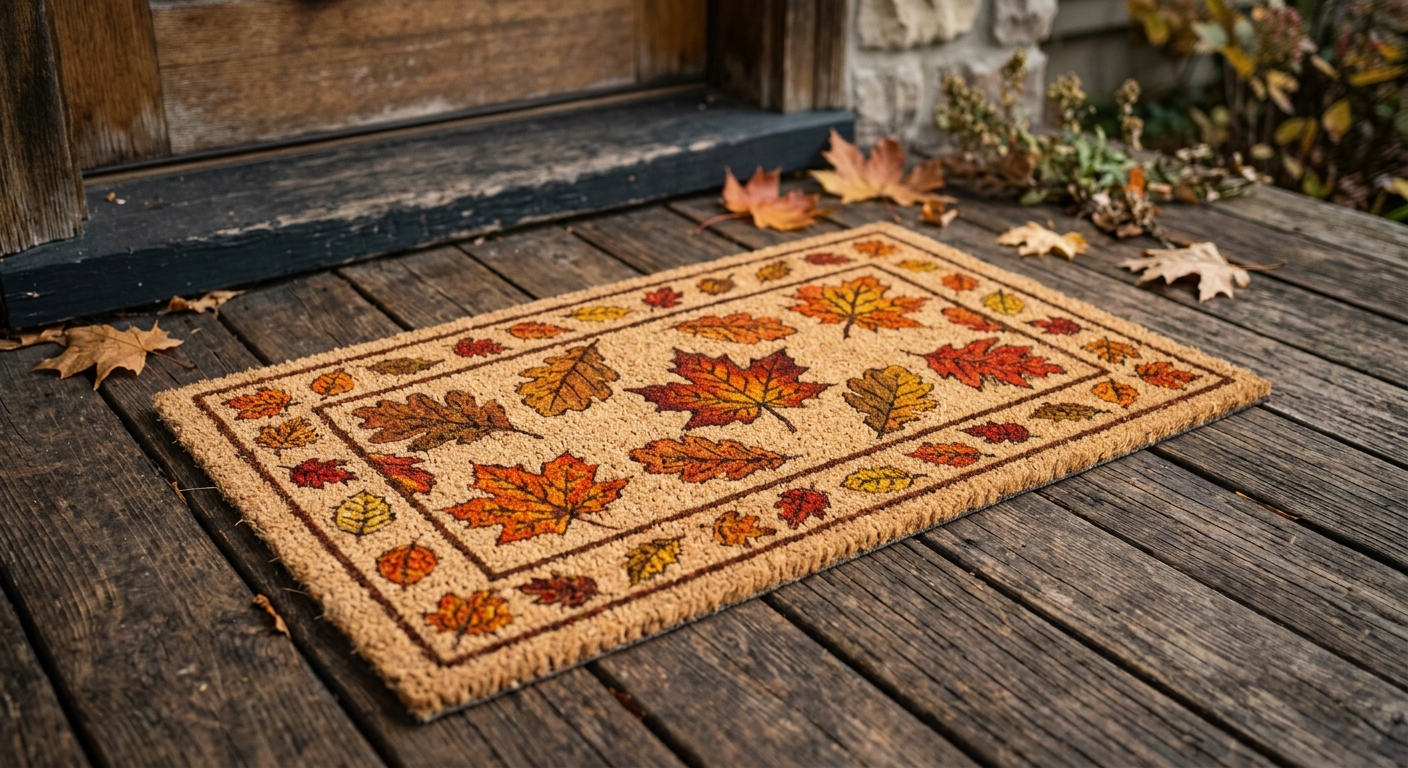
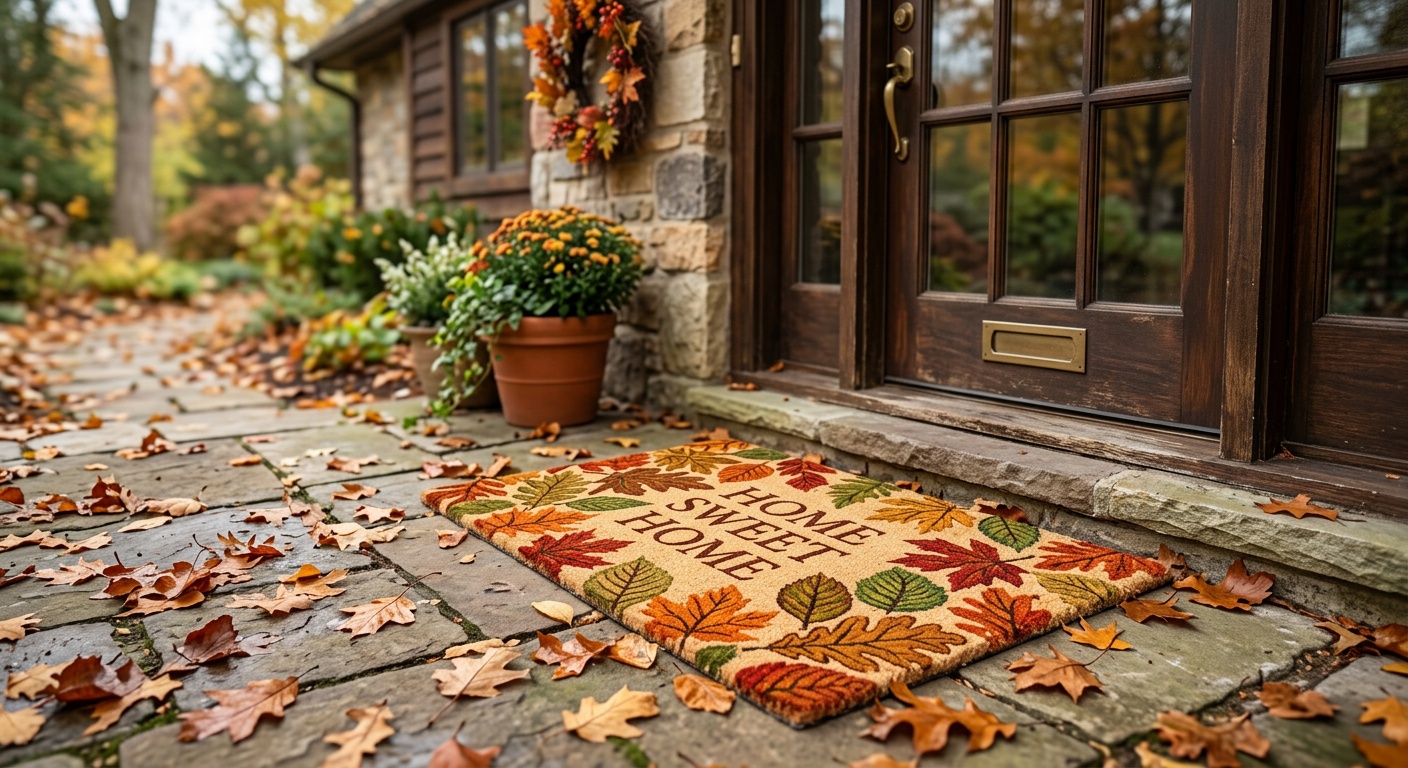
- Outdoor scraper mat — A commercial-grade rubber or coir mat placed outside the door. Look for a minimum bristle height of 1.25 inches for effective mud scraping. The EcoScrub Pro series, popular in 2026, combines recycled rubber with antimicrobial coir bristles.
- Indoor absorbent mat — Immediately inside the door, a high-pile microfiber mat (minimum 22 oz. face weight) captures residual moisture. Replace or launder these weekly during peak fall months.
- Shoe-removal zone — A dedicated, aesthetically functional area with seating and storage. Studies from the University of Arizona’s Environmental Research Lab found that removing shoes at the door reduces carpet bacteria by up to 60 times.
- Pet paw station — A small bin with microfiber towels or pet-specific paw cleaning mitts near every exterior door. This single addition makes a remarkable difference.
Quick Scenario: The Martinez family in Denver, Colorado, added a two-mat system and a shoe bench in fall 2025. By spring 2026, their professional carpet cleaner noted significantly less embedded grit and estimated they’d extended their carpet life by at least two additional years — a savings of roughly $1,800 in deferred replacement costs.
The Fall Deep-Clean Protocol
Prevention handles what comes in. Deep cleaning handles what’s already there. Your fall carpet deep-clean should happen in October, ideally before the heating season begins in earnest. This timing matters: you want to remove summer’s accumulated load before your heating system begins circulating dried particulates back through the air and resettling them into carpet fibers.
Step-by-Step Fall Deep-Clean Checklist
Week 1: Preparation and Assessment
- ☐ Move furniture off carpeted areas where possible
- ☐ Inspect carpet for stains, damaged areas, or lifting seams — address these before cleaning
- ☐ Identify high-traffic zones (hallways, living room paths, bedroom doorways) for focused treatment
- ☐ Check carpet manufacturer warranty for approved cleaning methods — some newer SmartFiber carpets introduced in 2024–2025 have specific pH requirements
Week 2: Vacuuming Protocol
This is where most homeowners underperform. A proper fall vacuuming isn’t a quick pass with a standard vacuum. Consider this framework:
- ☐ Use a HEPA-filter vacuum (non-negotiable for allergen management)
- ☐ Vacuum in four directions — north-south, then east-west, for each area
- ☐ Slow down — most people vacuum 3x too fast for effective soil extraction
- ☐ Vacuum edges and baseboards with the crevice tool
- ☐ Run the beater bar height setting appropriate to your carpet pile depth
- ☐ Repeat the full process twice in high-traffic areas
Week 3: Spot Treatment and Pre-Treatment
- ☐ Apply an enzyme-based pre-treatment to pet traffic areas (enzymatic formulas break down organic matter chemically, not just cosmetically)
- ☐ Treat any visible stains with appropriate spot removers — use the blot-don’t-rub technique
- ☐ Apply a commercial carpet pre-spray to high-traffic zones 10–15 minutes before any wet cleaning
Week 4: Deep Extraction or Professional Service
Hot water extraction (commonly called “steam cleaning,” though technically different) remains the gold standard for fall deep cleaning. A 2026 survey by the Carpet and Rug Institute found that 78% of professional carpet cleaners recommend hot water extraction at least once annually, with fall being the optimal timing.
Your options:
- DIY rental unit — Available at most home improvement stores for $45–$75/day. Effective for maintenance, but lower water pressure than professional equipment
- Professional hot water extraction — Average cost in 2026: $175–$350 for a 1,500 sq ft home. Removes up to 97% of dirt and bacteria
- Low-moisture encapsulation — Faster drying, good for fall (avoids mold risk from wet carpets in cool weather), effective for lightly-soiled carpets
Pro Tip: When hiring professionals in fall 2026, ask specifically about anti-resoiling treatments applied post-extraction. These polymer coatings, which became significantly more sophisticated in the 2024–2025 product cycle, can extend the time between deep cleans by up to 40%.
HVAC, Humidity, and Hidden Carpet Threats
Here’s the connection most carpet guides completely ignore: your HVAC system and your carpets are in a constant biological conversation. When your heating system switches on in fall, it does two things simultaneously — it reduces indoor humidity (creating static electricity that makes carpets attract more dust) and it mobilizes settled dust from ductwork directly onto carpet surfaces.
The humidity piece deserves special attention. The EPA recommends maintaining indoor relative humidity between 30–50%. In fall, forced-air heating systems frequently push indoor humidity below 25%, which:
- Increases static charge in synthetic carpet fibers, accelerating dust attraction
- Causes natural fiber carpets (wool, sisal) to dry out and become brittle
- Paradoxically makes carpet feel dirtier faster, even when clean
The Fall HVAC-Carpet Maintenance Sync
Treat your HVAC and carpet maintenance as a coordinated system, not independent tasks:
- Replace HVAC filters in early October — Use MERV-13 or higher filters (compatible with your system) to capture fine particulates before they settle into carpet. In 2026, smart filter systems with app-connected monitoring have made this even easier to track.
- Schedule duct cleaning every 3–5 years — If you haven’t had ducts professionally cleaned recently, fall is the time. The National Air Duct Cleaners Association reported in 2025 that cleaned ductwork reduces carpet resoiling rates by approximately 22% in the first heating season.
- Add whole-home humidification — A whole-home humidifier connected to your HVAC (typical installation cost: $400–$900 in 2026) maintains optimal humidity levels and demonstrably reduces the static-carpet-dust cycle.
- Vacuum carpet the day after heating system activation — The first few days of heating season deposit substantial dust. A thorough vacuuming on day 2–3 captures this before it embeds deeply.
Tools and Products Worth Using in 2026
The carpet care product landscape has evolved considerably. Here’s what’s actually worth your investment this fall:
Vacuum Technology in 2026
The introduction of AI-assisted path-mapping in robotic vacuums has made automated daily maintenance genuinely effective for the first time. Models like the CleanLogic X7 Pro (released Q1 2026) can distinguish between carpet pile depths and adjust suction accordingly — a limitation that plagued earlier robot vacuums. For manual vacuums, the cordless upright category has matured significantly, with runtime now exceeding 90 minutes on premium models.
Key features to look for in a 2026 vacuum:
- Sealed HEPA filtration system (the “sealed” distinction matters — unsealed HEPA still leaks allergens)
- Variable suction with carpet/hard floor detection
- Self-cleaning brushroll technology (prevents hair tangles)
- Anti-allergen exhaust filtration rating
Carpet Protection Products
Fluoropolymer-based carpet protectors (the category Scotchgard helped pioneer) have undergone significant reformulation since the 2023 EPA guidelines on PFAS compounds. The newer generation of protectors, including bio-based alternatives like GreenGuard Shield Pro, offer comparable performance without the environmental concerns. Apply a fresh coat of protector after your fall deep clean — it creates a chemical barrier that makes subsequent cleaning dramatically easier.
Carpet Maintenance Methods: A Comparison
| Method | Effectiveness | Avg. Cost (2026) | Drying Time | Best For |
|---|---|---|---|---|
| Hot Water Extraction (Pro) | 97% soil removal | $175–$350 | 6–12 hours | Annual deep clean |
| DIY Steam Rental | 80–85% soil removal | $45–$75/day | 8–24 hours | Moderate soiling |
| Encapsulation | 75–82% soil removal | $100–$200 | 1–2 hours | Lightly soiled, busy households |
| Dry Compound Cleaning | 65–72% soil removal | $80–$160 | None (immediate) | Quick turnaround needed |
| Regular HEPA Vacuuming | Surface-level maintenance | Equipment only | Immediate | Weekly upkeep |
Soil Reduction Impact by Fall Maintenance Strategy
Based on 2025–2026 indoor air quality research data, here’s how different fall interventions compare in reducing carpet soil load by the following spring:
Common Fall Carpet Challenges and How to Solve Them
Challenge 1: Mud Season Tracking
October and November create what carpet professionals call “mud season” — a relentless cycle of wet outdoor conditions and foot traffic. The mistake most homeowners make is attempting to clean mud immediately. Don’t. Let mud dry completely (typically 2–4 hours), then vacuum up the dried particles before any wet treatment. Attempting to clean wet mud spreads it deeper into the carpet pile and significantly increases the risk of permanent staining. Once the bulk is vacuumed, apply a cold-water rinse with a white cloth, working from the outside of the stain inward.
Challenge 2: Pet Traffic in Wet Fall Conditions
Dogs and cats don’t understand the concept of wiping their feet. A medium-sized dog coming in from a rainy yard can deposit the equivalent of a tablespoon of mud and moisture with every indoor step. Beyond the mud, wet pet paws introduce outdoor mold spores and bacteria at an accelerated rate in fall. Solution: Establish a mandatory paw-wipe zone at every exterior door, use microfiber pet towels kept in a dedicated basket, and consider a pet-safe antimicrobial spray on high-traffic carpet zones applied weekly during wet months.
Challenge 3: Reappearing Stains After Cleaning
You’ve cleaned a stain, it looks great — and three days later, a brownish shadow reappears. This frustrating phenomenon, called wicking, occurs when residual soil or cleaning solution embedded in the carpet backing migrates back up through the fibers as the carpet dries. To prevent wicking: use minimal moisture during cleaning, apply a clean white towel weighted down over the cleaned area for several hours after treatment, and ensure thorough drying with a fan. For persistent wickers, a dry absorbent compound applied after wet cleaning effectively blocks the migration path.
Frequently Asked Questions
How often should I deep clean my carpets in fall specifically?
For most households, one professional or DIY deep clean in early-to-mid October is sufficient as a fall protocol. However, homes with pets, young children, or allergy sufferers should consider a second light deep-clean in late November, after the heaviest leaf-tracking season but before full winter foot traffic patterns establish. The key is timing relative to your heating season — deep clean before your HVAC runs continuously, not after.
Is it safe to use carpet cleaning products when children and pets are present?
In 2026, the carpet cleaning product market has evolved significantly toward safer formulations. Look for products carrying the EPA Safer Choice label, which certifies ingredient safety for households with sensitive occupants. Enzymatic cleaners are particularly safe and highly effective. The primary precaution is ensuring adequate drying time — keep pets and children off cleaned areas until fully dry, typically 4–8 hours. Avoid products containing optical brighteners, artificial fragrances, or high-pH solvents if you have young children who spend time on floor surfaces.
When should I call a professional carpet cleaner versus doing it myself?
DIY carpet maintenance is fully adequate for routine fall maintenance — vacuuming, spot treatment, and even rental hot water extraction for lightly-to-moderately soiled carpets. Call a professional when: your carpet hasn’t been deep-cleaned in over 18 months, you’re dealing with sewage, significant mold, or pet urine saturation, you have warranty requirements, or you own specialty carpets (wool, silk, or high-end synthetic blends) that require certified cleaning expertise. In 2026, many professional services offer free video assessments before scheduling, which helps determine whether professional intervention is genuinely needed.
Your Fall Carpet Action Plan: Start This Weekend
You now have everything you need to transform your carpet care from reactive to strategic. The households that come out of winter with fresh, healthy carpets aren’t the ones with the most expensive flooring — they’re the ones who acted deliberately in October rather than scrambling in February.
Here’s your prioritized action roadmap:
- This weekend: Set up your entryway mat system and shoe-removal zone. This is the highest-ROI single action you can take — free to low-cost, immediately effective.
- Week 2: Replace your HVAC filters with MERV-13 units and perform your thorough four-direction HEPA vacuuming across all carpeted areas.
- Week 3: Book your professional extraction or reserve your rental unit. Treat existing stains before the appointment and apply enzyme pre-treatment to pet zones.
- Week 4: Post-clean, apply a quality carpet protector. Set a phone reminder for your next monthly vacuuming and a spring 2027 maintenance check.
- Ongoing: Keep a pet paw station by every exterior door. Vacuum high-traffic areas twice weekly through November and December.
The broader trend worth noting: as homes become more airtight with improved insulation standards (a direct result of 2024–2026 energy efficiency building codes), indoor air quality has become more dependent on proactive maintenance, not less. Your carpet is functionally your home’s largest air filter. How you treat it this fall directly determines the air your family breathes this winter.
“A well-maintained carpet isn’t a luxury — it’s a health asset. The families who understand this don’t just have cleaner floors. They have healthier homes.” — Dr. Sarah Kellerman, Indoor Environmental Quality Research, 2025
So here’s the question worth sitting with: If your carpet could tell you what it’s been holding onto since last spring, would you be surprised by the answer? Take this fall as your opportunity to reset — not because perfection is the goal, but because your home deserves the same intentional care you give everything else that matters.