Monthly Home Maintenance Checklist Including Deep Carpet Cleaning
Monthly Home Maintenance Checklist Including Deep Carpet Cleaning
Reading time: 14 minutes
Ever walked into a room and felt something was subtly off—a faint musty smell, a carpet that looked dull no matter how much you vacuumed, or a bathroom fan that hummed louder than it should? You’re not imagining things. Your home is constantly communicating with you, and most of us simply don’t speak the language yet.
Here’s the straight talk: Home maintenance isn’t about perfection—it’s about strategic prevention. According to a 2025 report by the National Association of Home Builders, homeowners who follow a structured monthly maintenance schedule spend an average of 47% less on emergency repairs compared to those who address issues reactively. That’s not a small number when you consider that the average unplanned home repair in 2026 costs between $800 and $3,200.
This guide is your practical roadmap—room by room, task by task—with special focus on deep carpet cleaning, one of the most overlooked yet impactful elements of home health. Whether you’re a first-time homeowner or someone who’s been maintaining a home for years but wants a smarter system, this checklist is built for you.
Table of Contents
- Why Monthly Maintenance Changes Everything
- The Master Monthly Home Maintenance Checklist
- Deep Carpet Cleaning: The Complete Guide
- Seasonal Overlays for Your Monthly Routine
- Essential Tools and Products for 2026
- Cost Comparison: DIY vs. Professional Services
- Frequently Asked Questions
- Your Home, Your Roadmap Forward
Why Monthly Maintenance Changes Everything
Think about it this way: you wouldn’t skip oil changes for years and expect your car to run smoothly. Your home operates on the same principle. Small, consistent actions prevent catastrophic, expensive failures.
Consider the story of Marcus and Elena, a couple in Portland who purchased their first home in 2023. They skipped routine HVAC filter changes and ignored a slow-draining bathroom sink for eight months. By early 2025, they were facing a $4,700 HVAC replacement and a $1,100 plumbing repair—all preventable with roughly 90 minutes of monthly maintenance. Their carpets, similarly neglected, showed permanent staining and had to be fully replaced at a cost of $6,800.
In contrast, their neighbors on the same street—who implemented a structured monthly checklist—spent just $340 on routine supplies and professional carpet cleaning over the same period, with their home’s interior still looking nearly new in 2026.
The math is undeniable. According to HomeAdvisor’s 2026 State of Home Spending Report:
- Preventive maintenance costs average $150–$300 per month for a standard 2,000 sq ft home
- Reactive repairs average $3,000–$12,000 per incident
- Homes with documented maintenance schedules sell for 3–5% more than comparable properties
- Indoor air quality in maintained homes tests 60% cleaner than unmaintained ones
The Master Monthly Home Maintenance Checklist
Let’s break this into manageable zones. Each zone has specific tasks with estimated time investment so you can plan your monthly maintenance day without feeling overwhelmed.
Interior Maintenance Tasks
Kitchen
- Clean refrigerator coils — dust buildup forces the motor to work harder, increasing energy bills by up to 25% (15 min)
- Check and clean range hood filters — grease accumulation is a fire hazard (10 min)
- Run garbage disposal with ice cubes and salt to clean blades and eliminate odors (5 min)
- Inspect under-sink plumbing for moisture, drips, or mold growth (5 min)
- Deep-clean dishwasher with a descaling tablet to prevent mineral buildup (5 min active, 90 min cycle)
- Wipe down cabinet fronts, paying attention to grease-accumulating areas near the stove (15 min)
Bathrooms
- Test exhaust fans for adequate suction using the tissue paper test (2 min)
- Clean showerhead with vinegar solution to dissolve mineral deposits (10 min)
- Inspect caulking around tubs, showers, and sinks — cracked caulk allows water intrusion behind walls (10 min)
- Pour boiling water or enzymatic cleaner down slow drains (5 min)
- Check toilet flapper for wear — a faulty flapper can waste up to 200 gallons of water per day (5 min)
Living Areas and Bedrooms
- Vacuum upholstery including under cushions (20 min)
- Dust ceiling fans — direction should be counterclockwise in summer, clockwise in winter (10 min)
- Test smoke and carbon monoxide detectors (5 min)
- Rotate and flip mattresses if manufacturer recommends it (10 min)
- Inspect window seals for condensation between panes indicating seal failure (10 min)
HVAC and Air Quality
This is where most homeowners lose the most money through neglect. Your HVAC system is the lungs of your home, and monthly attention here pays enormous dividends.
- Replace or clean HVAC air filters — in 2026, MERV-13 filters are the standard recommendation for most residential systems. Replace every 30–60 days depending on pet ownership and local air quality (5 min)
- Check thermostat calibration — a thermostat off by just 2°F can increase energy bills by 5–7% (5 min)
- Inspect visible ductwork for gaps or damage (10 min)
- Clean supply and return vents with a damp microfiber cloth (15 min)
- Run dehumidifier in basement if applicable and empty/clean the collection tank (10 min)
Exterior Maintenance Tasks
- Walk the perimeter looking for foundation cracks, damaged siding, or gaps where pests might enter (15 min)
- Clean gutters if needed — monthly inspection prevents the need for emergency cleanings (10 min)
- Check exterior caulking around windows and doors (10 min)
- Test all exterior lighting and replace bulbs proactively (10 min)
- Inspect driveway and walkways for cracks that could worsen with freeze-thaw cycles (10 min)
- Check garage door balance and lubricate tracks (10 min)
Deep Carpet Cleaning: The Complete Guide
If there’s one item on your maintenance checklist that consistently gets underestimated, it’s carpet care. Your carpets are essentially giant air filters—they trap dust, pet dander, volatile organic compounds, mold spores, bacteria, and more. According to the Indoor Air Quality Association, carpets can hold up to four times their weight in dirt and debris before showing visible soiling.
A basic monthly vacuum is not enough. Here’s how to build a tiered carpet care system.
The Three-Tier Carpet Maintenance System
Tier 1: Weekly Vacuuming (Foundation Maintenance)
Use a vacuum with a HEPA filter and adjust the height setting to your carpet pile. High-traffic areas should be vacuumed at least twice weekly. Vacuum slowly—multiple passes in different directions lift embedded debris that a single quick pass misses. In 2026, smart robot vacuums like those from iRobot and Roborock have become capable enough for daily maintenance runs, supplemented by a thorough manual vacuum weekly.
Tier 2: Monthly Spot Treatment and Surface Refresh
- Treat any new stains immediately using the blot-don’t-rub method
- Apply a carpet refresher powder (baking soda works excellently as a low-cost option), leave for 15 minutes, then vacuum thoroughly
- Use an enzyme-based spot cleaner for pet accidents — these break down organic matter at the molecular level
- Inspect carpet edges and seams for fraying or lifting
- Move furniture slightly to prevent permanent indentation in pile
Tier 3: Quarterly Deep Cleaning (The Real Game-Changer)
This is where the transformation happens. Deep cleaning should occur every 3–4 months in high-traffic homes (pets, children, frequent guests) or every 6 months in lighter-traffic households. The Carpet and Rug Institute’s 2025 updated guidelines reinforce this frequency as optimal for maintaining warranty validity on most major carpet brands.
Deep Cleaning Methods Compared:
- Hot Water Extraction (Steam Cleaning): The most effective method, recommended by virtually all major carpet manufacturers. A pressurized stream of hot water is injected into the carpet pile and immediately extracted along with dissolved dirt. Penetrates deepest into fibers. Requires adequate drying time (4–8 hours with good ventilation).
- Dry Compound Cleaning: A moist powder is worked into the carpet and then vacuumed out. Lower moisture means faster drying (1–2 hours), but doesn’t penetrate as deeply. Good for maintenance between hot water extractions.
- Encapsulation Cleaning: A polymer solution crystallizes around soil particles, which are then vacuumed away. Low moisture, fast drying, increasingly popular in commercial settings. Growing in residential use in 2026 due to improved formulations.
- Bonnet Cleaning: A rotating pad absorbs surface soil. Fastest method but most superficial—not recommended as a primary deep cleaning approach.
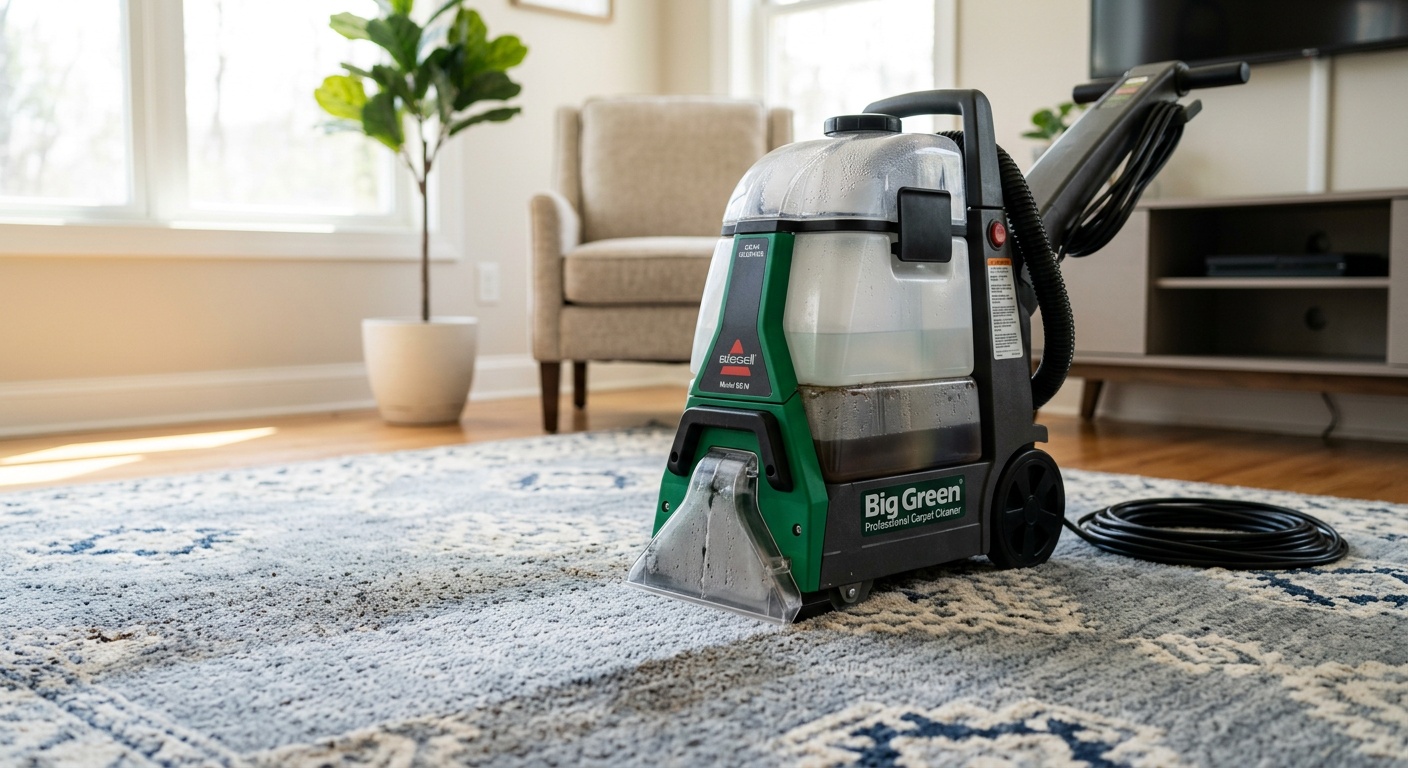
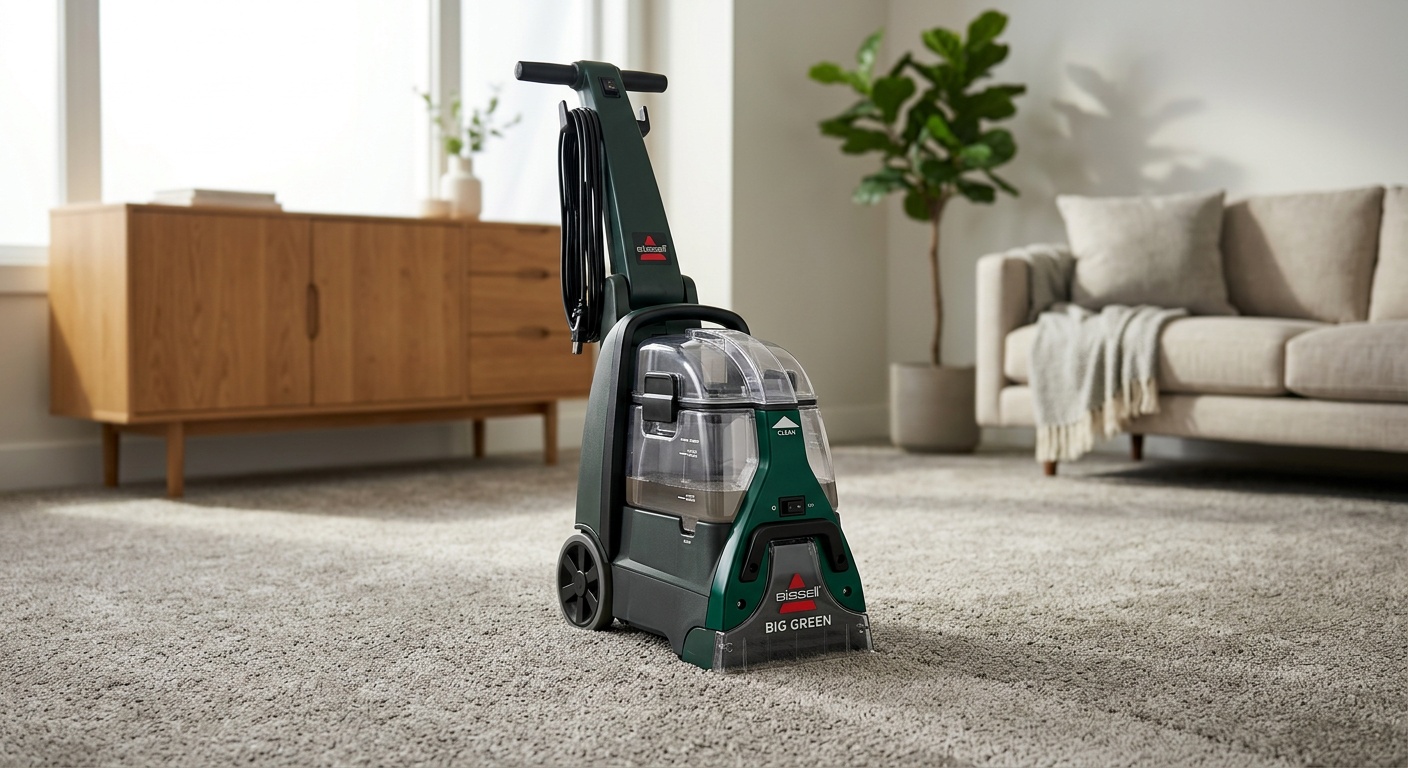
Pro Tip: If you’re renting a carpet cleaning machine, the Bissell BigGreen and Hoover PowerScrub Elite remain top-rated options for DIY deep cleaning in 2026. For genuinely embedded soil and allergens, a professional service with truck-mounted hot water extraction equipment delivers significantly better results.
Step-by-Step Deep Cleaning Process (DIY)
- Pre-vacuum thoroughly — removing dry soil before wet cleaning prevents it from turning to mud
- Pre-treat high-traffic lanes and stains with a quality pre-treatment spray, allow 5–10 minutes dwell time
- Mix cleaning solution according to machine instructions — never exceed recommended concentration
- Work in overlapping passes, moving slowly and methodically from far corner toward the exit
- Do a rinse pass with clean water only to remove detergent residue (residue attracts soil faster)
- Maximize airflow — open windows, run ceiling fans, use floor fans to accelerate drying
- Place furniture on foam blocks or plastic tabs until carpet is completely dry to prevent rust staining or wood tannin bleeding
Seasonal Overlays for Your Monthly Routine
While monthly tasks form your foundation, certain months demand additional attention. Here’s a quick-reference overlay for 2026:
- January–February: Check pipe insulation, inspect roof for ice dam formation, service heating system
- March–April: Deep clean after winter containment, inspect roof post-winter, service AC before summer demand
- May–June: Check irrigation systems, clean dryer vents (peak fire risk during high-use seasons), inspect deck/patio
- July–August: Monitor for pest activity, check attic for heat damage and ventilation adequacy
- September–October: Schedule chimney inspection, winterize outdoor faucets, check weatherstripping
- November–December: Test generator if applicable, check emergency supplies, deep clean before holiday gatherings
Essential Tools and Products for 2026
You don’t need a contractor’s arsenal—just the right tools for the job. Here’s what a well-equipped homeowner’s maintenance kit looks like in 2026:
- Digital moisture meter — invaluable for detecting hidden water damage behind walls and under flooring (~$35–$80)
- HEPA vacuum with variable suction — critical for both floor care and HVAC vent cleaning
- Infrared thermometer — identifies cold spots in insulation and hot spots in electrical panels (~$25–$60)
- Cordless caulk gun — makes bathroom and exterior caulking dramatically easier
- Enzyme-based multi-surface cleaner — handles organic stains on carpet, grout, and upholstery
- Microfiber cloth set — color-coded by zone to prevent cross-contamination
- Smart home maintenance app — apps like Centriq or HomeZada (both updated significantly in 2025) let you track tasks, set reminders, and store appliance manuals digitally
Cost Comparison: DIY vs. Professional Services
| Maintenance Task | DIY Cost (2026) | Professional Cost (2026) | Recommended Frequency | DIY Difficulty |
|---|---|---|---|---|
| Deep Carpet Cleaning (1,500 sq ft) | $40–$80 (rental + solution) | $180–$350 | Every 3–6 months | Moderate |
| HVAC Filter Replacement | $15–$35 per filter | $80–$150 (service call) | Monthly–Bi-monthly | Very Easy |
| Gutter Cleaning | $0–$25 (tool cost) | $120–$250 | 2–4 times per year | Moderate (ladder safety) |
| Dryer Vent Cleaning | $20–$40 (kit) | $100–$175 | Annually | Easy–Moderate |
| Caulking (Bathroom/Kitchen) | $10–$30 (caulk + tool) | $150–$400 | As needed / Annually | Easy with practice |
DIY Savings Visualization: Annual Cost Comparison
The chart below illustrates the potential annual savings by handling these five key maintenance tasks yourself versus hiring professionals:
Annual Savings: DIY vs. Professional (Per Task)
*Based on 2026 national average service pricing and typical DIY supply costs.
Frequently Asked Questions
How often should I deep clean my carpets if I have pets?
If you have one or more pets, the Carpet and Rug Institute recommends deep cleaning every 2–3 months rather than the standard 6-month cycle. Pet dander, hair, and occasional accidents create conditions where bacteria and allergens accumulate rapidly. Additionally, enzyme-based pre-treatments should be applied monthly to high-pet-traffic areas even between deep cleanings. If anyone in your household has allergies or asthma, consider quarterly professional hot water extraction as a non-negotiable health investment—not an optional luxury.
Can I skip monthly maintenance tasks if my home looks clean?
This is one of the most common and costly misconceptions in homeownership. Visual cleanliness and structural health are entirely different metrics. A refrigerator’s condenser coils can be dangerously dust-laden without any visual evidence from the outside. Carbon monoxide detectors can fail silently. Moisture can be building behind a tile wall for months before a visible stain appears. In fact, the most expensive home repairs—foundation issues, mold remediation, HVAC replacements—all share one characteristic: they were invisible until they became critical. The monthly checklist isn’t about what you can see; it’s about what you can prevent.
What’s the single most impactful monthly maintenance task I can do?
If you can only do one thing consistently, replace your HVAC air filter every 30–60 days. This single action protects your most expensive mechanical system, dramatically improves indoor air quality, reduces energy consumption by up to 15%, and costs less than $30 per month. A clean filter also means your HVAC system moves more air through your home with less effort—which means carpets, upholstery, and surfaces collect airborne particles more slowly. It’s the maintenance equivalent of compound interest: a small, consistent action that delivers outsized returns over time.
Your Home, Your Roadmap Forward
Here’s where we bring it all together—and make it real for you.
In 2026, homeownership is more financially significant than ever. With housing costs at historic highs in most markets and interest rates still elevated from the adjustments of recent years, the home you have is the most important investment you’re likely managing. Protecting it through consistent, intelligent maintenance isn’t just a lifestyle choice—it’s a financial strategy.
Your immediate action plan:
- This week: Download a home maintenance app (HomeZada or Centriq are both excellent) and input your home’s major systems, appliances, and their installation dates. This becomes your maintenance intelligence dashboard.
- This month: Schedule your “maintenance day”—pick a consistent date (many homeowners choose the first Saturday of each month) and block 3–4 hours. Work through the interior checklist systematically, starting with safety items (detector tests, fire extinguisher checks) first.
- This quarter: Book your first professional deep carpet cleaning if it’s been more than 6 months, or rent a machine and follow the step-by-step process outlined above. Document the before-and-after difference—it’s usually remarkable.
- This year: Build a home maintenance reserve fund targeting 1–2% of your home’s value annually. On a $400,000 home, that’s $4,000–$8,000 set aside—money that transforms from stress to security when something inevitably needs attention.
- Ongoing: Review and refine your checklist every six months. Your home’s needs evolve as systems age, seasons change, and your household composition shifts.
As smart home technology continues to evolve through 2026 and beyond, predictive maintenance tools—sensors that alert you to moisture anomalies, AI-driven HVAC diagnostics, and automated air quality monitoring—are becoming increasingly accessible and affordable. The homeowners who build strong manual maintenance habits today will be best positioned to integrate these tools intelligently as they become mainstream.
Here’s the question worth sitting with: If your home could tell you everything it needed right now to stay healthy, safe, and high-value for the next decade—would you be ready to listen? Your maintenance checklist is exactly that conversation. Start it today, and your future self will be genuinely grateful.